 English
 Español

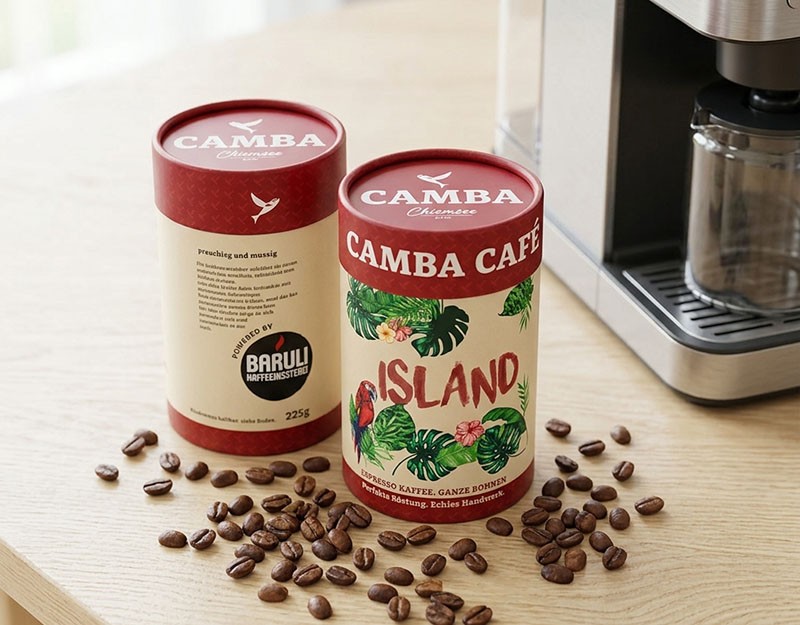
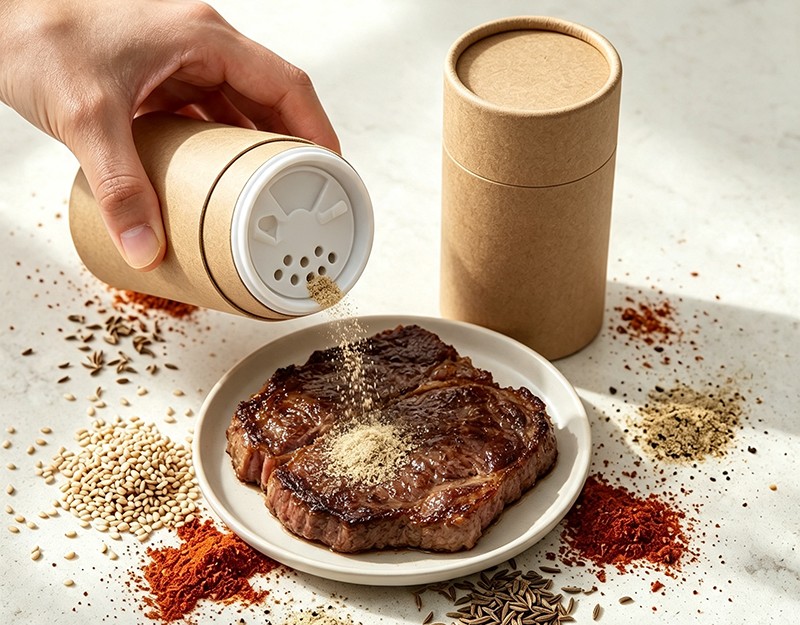


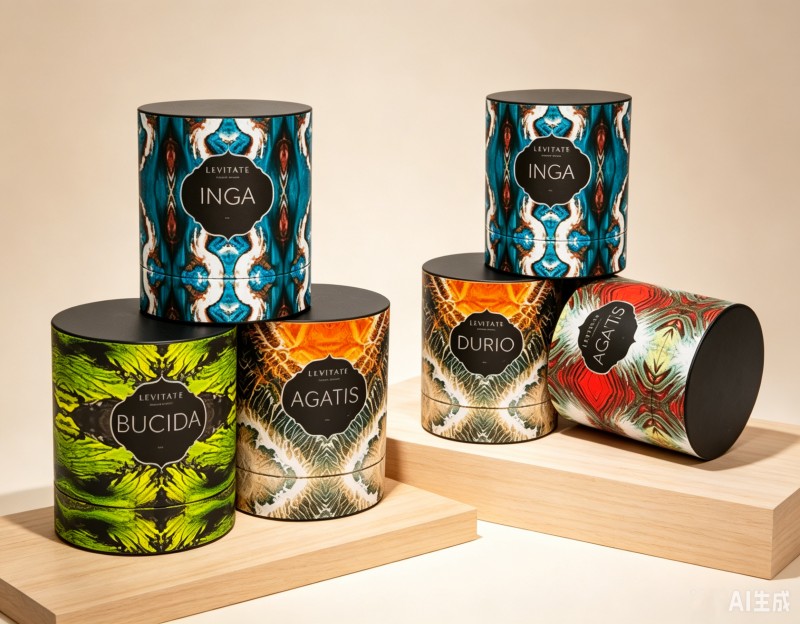


As one of the top China cardboard tube packaging manufacturers and paper tube packaging suppliers, we devote all of our efforts to research and launch more high quality packaging products to global market.
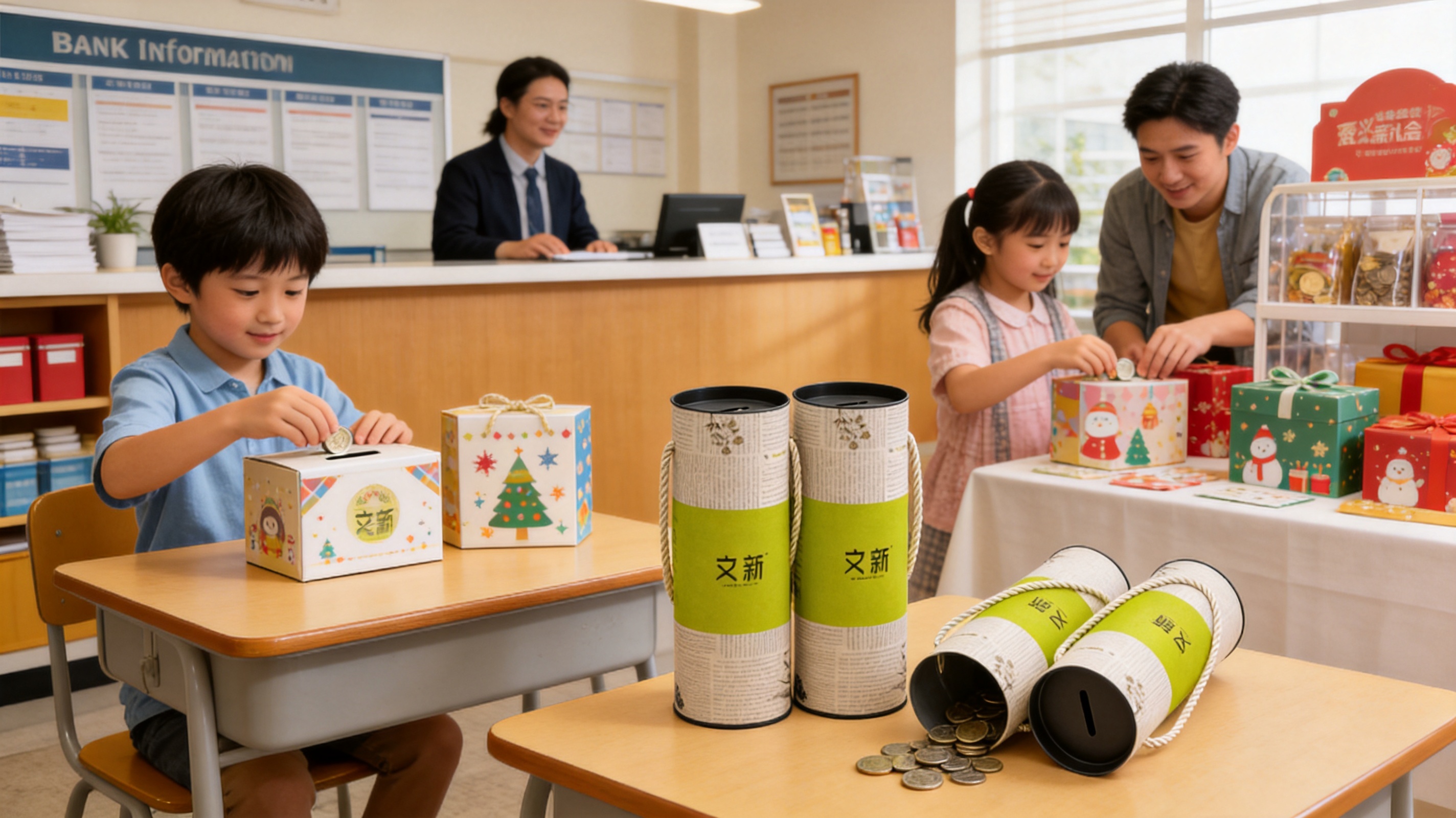
Packaging is no longer limited to protecting a product during storage and transportation. For many brands, the package is also a teaching tool, a promotional surface, a gift accessory, and an important part of the customer experience. The 53MM × H80MM custom printed round coin bank paper box combines these functions in one compact format. Designed for coin storage, children’s savings activities, promotional campaigns, retail gifts, and creative packaging programs, this cylindrical paper container offers a useful alternative to ordinary plastic money boxes and conventional folding cartons.
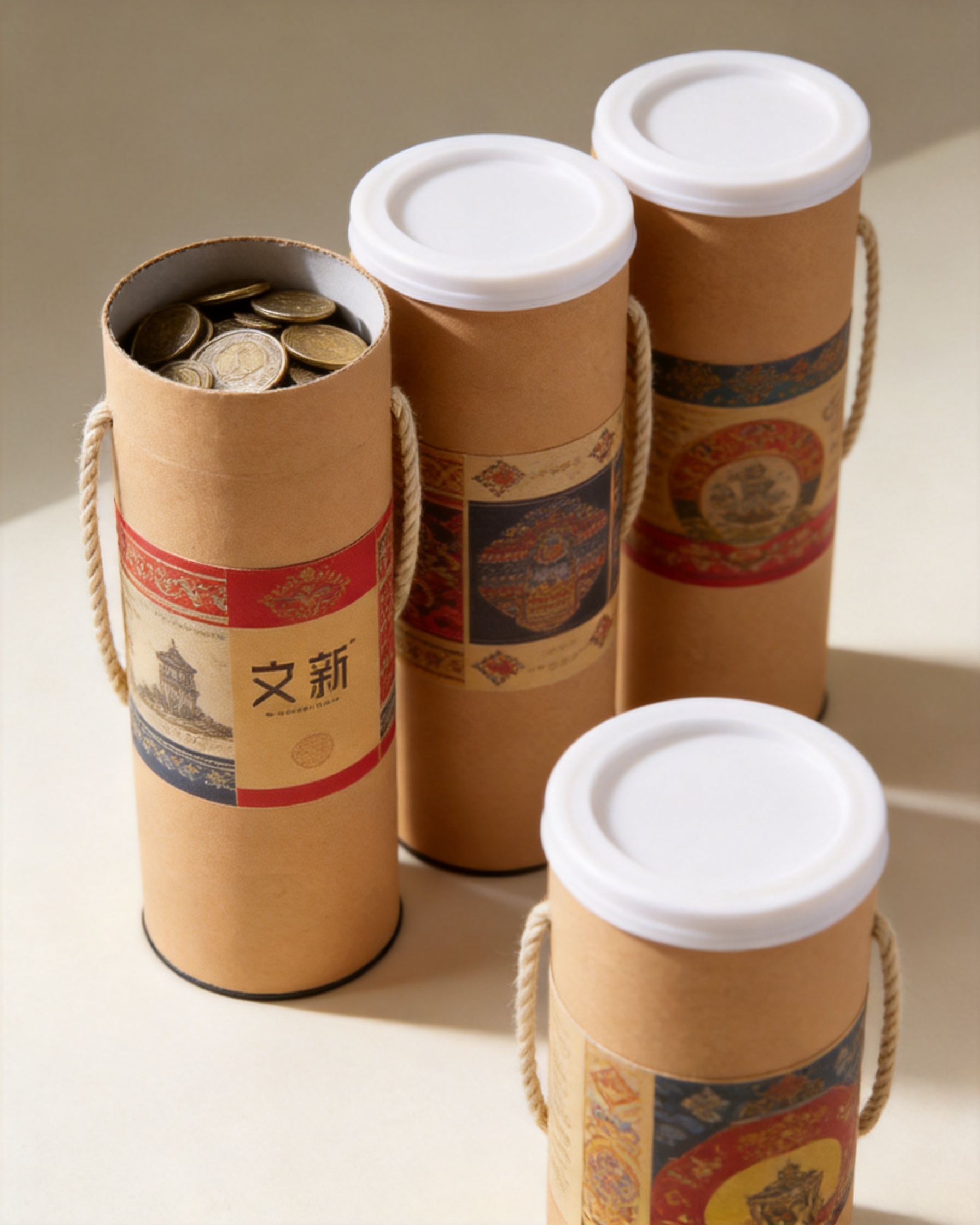
The product uses a kraft paper core, a 128g art paper label, offset printing, and matte lamination. It is completed with a white polyethylene lid designed to provide a soft, child-friendly touch. With an internal diameter of 53 millimeters and a height of 80 millimeters, the container is small enough for convenient handling while providing sufficient space for coins and other lightweight small items. Its round shape gives it a distinctive visual identity and makes it suitable for brands that want packaging with a stronger shelf presence than a standard rectangular box.
This article examines the product’s structure, manufacturing value, customization possibilities, functional advantages, and commercial applications. It also explains why an experienced paper tube and composite can manufacturer is important when a buyer needs consistent quality, reliable printing, food-packaging knowledge, and scalable production.
Content
- 1 Understanding the 53MM × H80MM Round Coin Bank Paper Box
- 2 Why a Round Paper Coin Bank Can Outperform Ordinary Packaging
- 3 Material Structure and Functional Design
- 4 Printing and Customization Opportunities
- 5 Advanced Manufacturing Strengths Behind the Product
- 6 Quality, Safety, and Compliance Considerations
- 7 Commercial Applications Across Different Markets
- 8 Branding Value and Customer Experience
- 9 Ordering and Custom Product Development
- 10 How the Manufacturer’s Experience Supports Global Buyers
- 11 Storage, Handling, and Display Recommendations
- 12 Sustainability Perspective
- 13 Frequently Asked Questions
- 13.1 What is the main use of this round paper box?
- 13.2 What are the stated dimensions?
- 13.3 What materials are used?
- 13.4 Can the artwork be customized?
- 13.5 What printing method is used?
- 13.6 What is the purpose of matte lamination?
- 13.7 Is the product suitable for children?
- 13.8 Does the lid include a coin slot?
- 13.9 Can the paper coin bank be used for food?
- 13.10 What makes the product different from a standard folding carton?
- 13.11 What makes it different from a plastic money box?
- 13.12 Is sampling recommended?
- 13.13 Can the product be used for promotional campaigns?
- 13.14 How should the product be stored?
- 13.15 What should buyers confirm before ordering?
- 14 Conclusion
- 15 References
- 16 Product: 53MM*H80MM Custom Printed Round Coin Bank paper Box
Understanding the 53MM × H80MM Round Coin Bank Paper Box
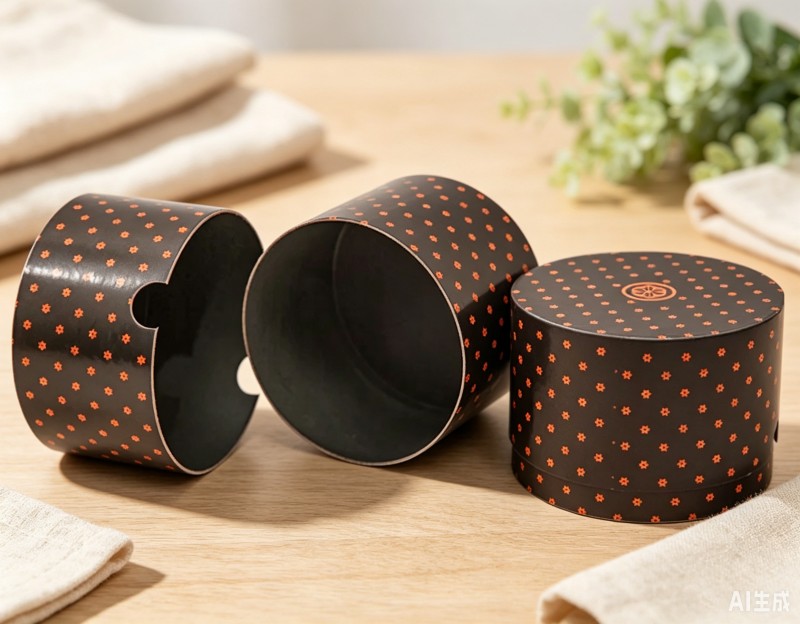
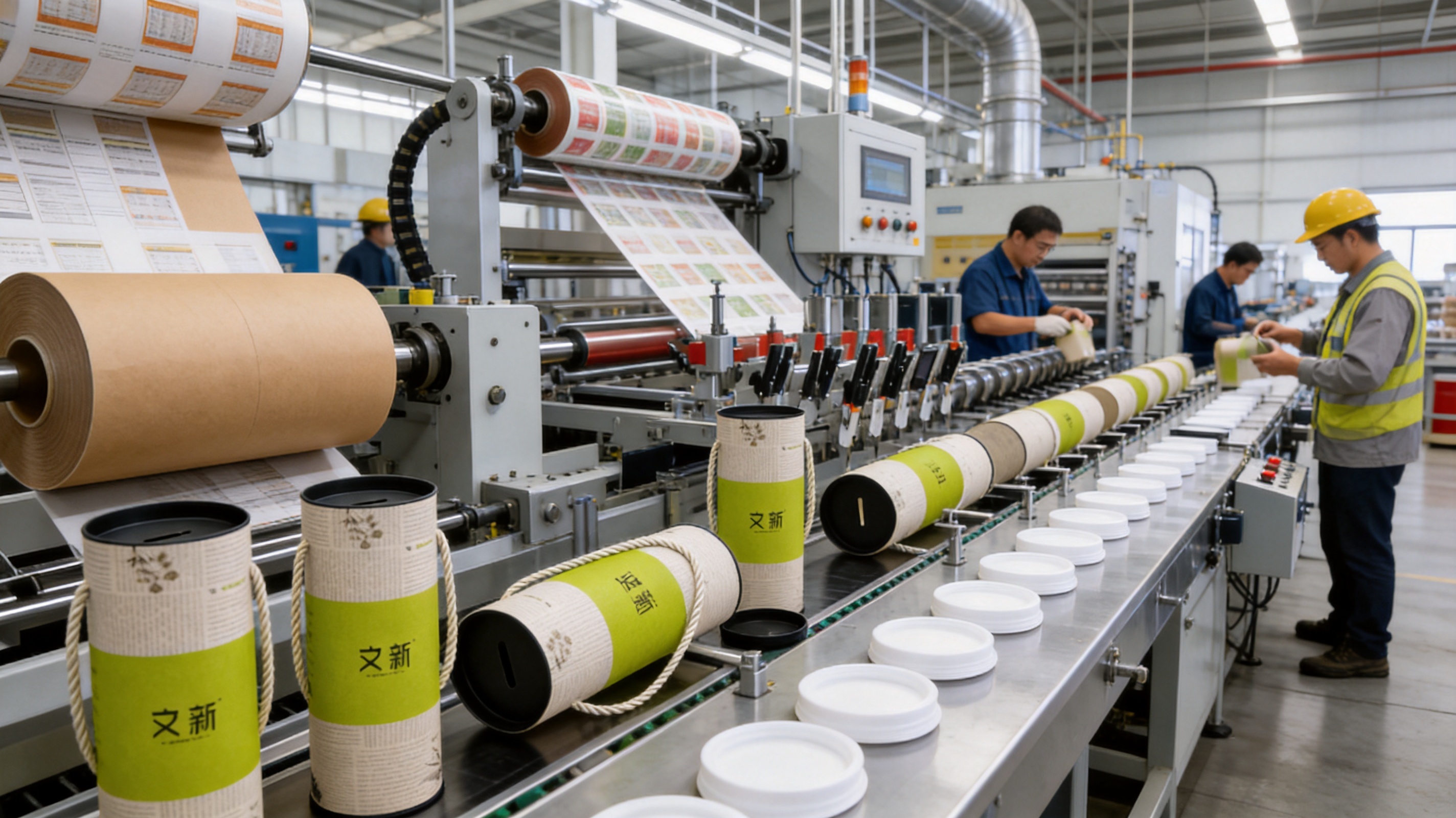
The product is a custom printed round coin bank money box made from composite paper packaging materials. Its construction combines a rigid kraft paper tube with a printed outer label and a fitted lid. This approach creates a container that is lightweight but more substantial than a simple paper sleeve. The cylindrical body provides a stable form, while the lid makes the package practical for repeated opening and closing.
The stated internal size is ID53MM × H80MM. “ID” refers to the internal diameter, so the container is designed with approximately 53 millimeters of usable internal width and an 80-millimeter body height. The actual external dimensions may vary slightly depending on the thickness of the paperboard, label, and closure components. Buyers requiring a precise external dimension, coin slot, or specialized internal fitting should confirm the final technical drawing before mass production.
Although the product is categorized as a coin bank, its cylindrical structure allows it to serve several related purposes. It can be used as a children’s savings container, a small promotional gift, a membership or loyalty item, a novelty package, or a reusable storage canister for lightweight objects. The product can also be integrated into educational campaigns that encourage saving, financial awareness, and responsible consumption.
The white polyethylene lid is particularly useful for a product intended for children. Its smooth and soft-feeling surface can make the package more comfortable to handle than a sharp-edged metal closure or a rigid, unfinished plastic component. The lid also gives the container a neat finished appearance and helps protect the contents from dust and casual contact.
Key Product Specifications
| Item | Specification | Commercial Significance |
|---|---|---|
| Product type | Custom printed round coin bank paper box | Combines storage, promotion, and gift functions |
| Internal size | Diameter 53 mm × height 80 mm | Compact format for coins and small lightweight items |
| Body material | Kraft paper core | Provides a rigid cylindrical structure and paper-based appearance |
| Outer label | 128g art paper | Creates a smooth surface suitable for detailed graphics |
| Printing | Offset printing | Supports clear, repeatable, and professionally controlled artwork |
| Surface treatment | Matte lamination | Reduces glare and gives the label a refined tactile finish |
| Lid | White polyethylene lid | Offers a clean appearance and a soft touch suitable for children |
| Customization | Custom orders accepted | Allows adaptation for campaigns, retailers, events, and private labels |
| Primary use | Coin bank | Supports savings programs, promotional distribution, and novelty retail |
Why a Round Paper Coin Bank Can Outperform Ordinary Packaging
Many low-cost promotional packages are designed for one-time use. Once the consumer removes the product, the package is discarded. A coin bank has a different lifecycle. Its core function continues after the initial purchase or campaign. The customer can keep it on a desk, shelf, bedside table, or child’s study area and use it repeatedly. This extended use gives the package a longer brand exposure period and increases the value of the printed surface.
The cylindrical form also distinguishes the package from common rectangular cartons. A round package can stand upright, create a stronger visual rhythm when displayed in multiples, and fit naturally into gift sets or themed product collections. It is especially appropriate for products and campaigns that use playful, friendly, or premium visual language.
Compared with a conventional plastic money box, the paper tube format offers a warmer and more tactile appearance. Kraft paper communicates a paper-based material story, while the art paper label allows the brand to add bright colors, illustrations, characters, seasonal graphics, instructions, or educational content. The matte finish can further reduce the low-cost appearance sometimes associated with highly glossy promotional packaging.
Compared with a thin paper carton, the composite tube offers greater structural stability. A folding carton depends largely on its creases and locking tabs. A paper tube has a continuous cylindrical wall, which helps it maintain its shape during normal handling. This makes it appropriate for retail displays, mailer inserts, promotional kits, and gift packaging where the package needs to remain presentable.
The product also has a strong balance between practicality and emotional appeal. A money bank is associated with saving, growth, learning, and future goals. These associations give the container a natural storytelling function. A financial institution can use it to support children’s savings education. A school or community organization can use it in a fundraising program. A consumer brand can use it as a loyalty gift or seasonal promotional item.
Advantages Compared with Common Alternatives
Plastic containers can be highly durable, but they may appear generic and can be less aligned with paper-focused sustainability programs. Metal tins provide a premium impression, but they are usually heavier, may have sharp edges if poorly finished, and often require more complex tooling or forming processes. Folding cartons can be economical, but they do not offer the same rigid cylindrical presence or long-term reuse.
The paper tube coin bank occupies a useful middle position. It provides more shape retention than a lightweight carton, a softer visual identity than metal, and a more customizable printed area than many standard plastic products. It is also lightweight, which can help reduce shipping weight compared with metal alternatives. The final environmental profile depends on the complete material combination, coatings, lid, inks, and local recycling systems, but a paper-based body can support packaging programs that seek to reduce the proportion of rigid plastic.
| Comparison Factor | Round Paper Coin Bank | Folding Carton | Plastic Money Box | Metal Tin |
|---|---|---|---|---|
| Shape identity | Distinctive cylindrical form | Usually rectangular or square | Can be molded into many shapes | Often cylindrical or rectangular |
| Printed branding area | Continuous wraparound label | Multiple flat panels | Usually printed label or direct decoration | Printed surface or label |
| Perceived tactility | Warm, paper-based, matte option | Light and flexible | Smooth and synthetic | Cool and rigid |
| Reuse potential | Suitable for repeated coin storage | Limited by folding wear | Generally high | Generally high |
| Shipping weight | Relatively light | Very light | Moderate, depending on design | Relatively heavy |
| Brand personality | Friendly, creative, educational, or premium | Functional and economical | Modern or mass-market | Classic or premium |
Material Structure and Functional Design
The kraft paper core forms the main body of the container. In a composite paper tube, paper layers are bonded to create a stable wall. The core is important because it determines the basic rigidity, roundness, and resistance to ordinary handling. A well-formed core should remain consistently cylindrical and provide a reliable base for the outer label.
The art paper label supplies the primary communication surface. At 128 grams, it is suitable for producing a smooth printed wrap without making the package unnecessarily heavy. The label can carry brand logos, color systems, characters, illustrations, savings instructions, product information, campaign messages, or decorative patterns. Since the label wraps around the curved body, the artwork should be prepared with attention to the seam, orientation, and the way graphics flow around the cylinder.
Offset printing is appropriate when the design requires crisp text, controlled color reproduction, and consistent results across a production run. It is especially useful for artwork containing small text, multiple colors, detailed illustrations, or brand-specific color references. Before production, the buyer should approve a digital proof and, where color precision is critical, request a physical sample or production proof.
Matte lamination provides a low-glare appearance and a smoother hand feel. This finish can make the package easier to view under retail lighting because reflections are reduced. It can also help protect the printed label from light scuffing and ordinary surface contact. Matte lamination changes the visual character of printed colors, often making them appear softer and more restrained than the same artwork under a high-gloss finish.
The white polyethylene lid creates a visual contrast with the printed body. White is compatible with many color schemes and can support a clean, child-friendly design. It may also allow the lid to function as a neutral component across several product variations. For custom programs, buyers should confirm whether the lid is intended only as a cover or whether it will include a coin slot, molded detail, tamper feature, or additional decoration.
Design Considerations for the Coin Function
A coin bank must be designed around the way users insert and retrieve coins. The product information identifies the item as a coin bank and specifies a white polyethylene lid, but the exact configuration of the coin opening should be confirmed with the manufacturer. A slot in the lid, a removable top, or another access design will affect usability, security, tooling, and cost.
If the package is intended for young children, the opening should be easy enough for coins to be inserted but should not create unnecessary sharp edges or loose small components. The overall package should be evaluated for the intended age group and usage environment. If the product is supplied as a children’s promotional item, the buyer should determine whether additional testing, labeling, or market-specific requirements apply.
For adult promotional programs, the coin bank may be designed with a more decorative or premium appearance. The artwork can incorporate savings goals, financial education messages, event branding, or collectible series graphics. For retail sale, the package may be combined with an outer carton, hanging feature, or barcode label depending on the distribution channel.
Printing and Customization Opportunities
Custom printing is one of the strongest advantages of this product. The body acts as a compact 360-degree communication surface. Instead of limiting the design to one front panel, a brand can use the entire circumference to create a continuous visual narrative. One section may show the logo, another may explain the savings concept, and another may display an illustration or call to action.
Artwork can be adapted for different audiences. A children’s design may use friendly characters, bright colors, simple saving instructions, and playful icons. A bank or financial education provider may prefer a more structured layout with a savings target, a motivational statement, and clear educational information. A toy or gift company may use seasonal artwork, collectible characters, or limited-edition patterns.
The matte-laminated art paper surface supports both text and imagery. However, artwork should be prepared for a curved package rather than a flat panel. Important text should not be placed too close to the seam, top edge, or bottom edge. Logos should be aligned consistently from one unit to another. Any barcode or QR code included in the design must be tested after printing and lamination to confirm reliable scanning.
Color management is also important. The appearance of a printed color may change because of the paper shade, ink coverage, lamination, and viewing conditions. A buyer with strict brand standards should provide approved color references and request a proof before mass production. Large solid color areas should be reviewed carefully because they may reveal minor variation more easily than small decorative elements.
Custom orders can also involve changes to the lid color, label artwork, packaging arrangement, and secondary packing. The available options depend on order quantity, tooling requirements, and production planning. Clear communication at the quotation stage helps avoid misunderstandings about what is included in the standard specification and what is considered an optional modification.
Potential Customization Elements
| Customization Area | Possible Direction | Important Approval Point |
|---|---|---|
| Label artwork | Logo, illustrations, campaign graphics, instructions, or patterns | Confirm dieline, seam position, and printable area |
| Color scheme | Brand colors, seasonal palettes, or educational themes | Approve proof or color reference before production |
| Surface appearance | Matte laminated presentation | Review how lamination affects color and texture |
| Lid appearance | White standard lid or approved alternative | Confirm material, fit, and available color options |
| Coin access | Slot, removable lid, or another agreed configuration | Confirm usability, safety, and tooling details |
| Retail preparation | Barcode, hang tag, outer carton, or gift set integration | Confirm packing method and distribution requirements |
| Campaign versioning | Multiple designs for schools, events, or product series | Confirm minimum quantities and artwork change costs |
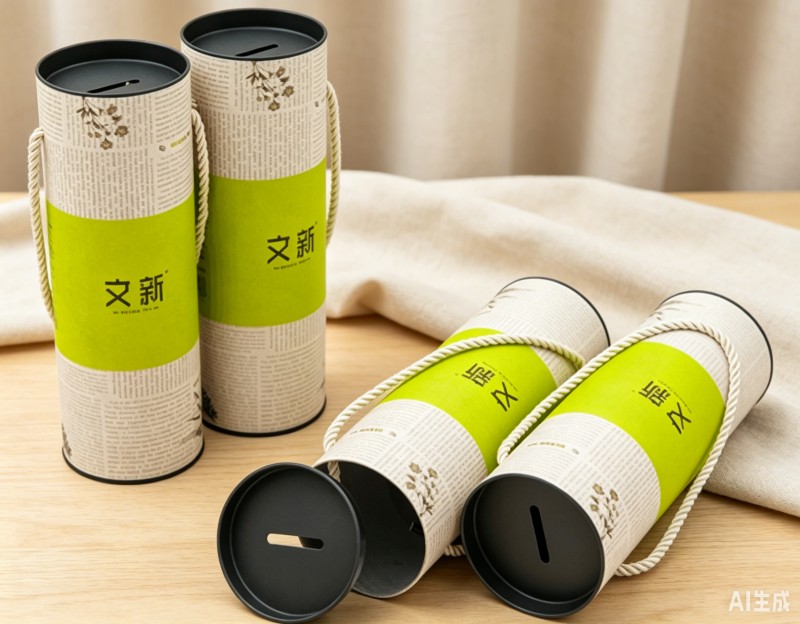
53MM*H80MM Custom Printed Round Coin Bank paper Box
Advanced Manufacturing Strengths Behind the Product
The performance of a paper tube depends on more than the visible label. The core-forming process, material bonding, cutting accuracy, label application, closure fitting, printing control, and final inspection all influence the finished result. For this reason, buyers should evaluate the manufacturing experience behind the product rather than selecting only on the basis of appearance or unit price.
Hangzhou Qunle Packaging Co., Ltd. has been engaged in the composite can and paper can industry for more than 20 years. This long period of specialization provides relevant experience in paper-based cylindrical packaging and composite container production. The company’s business covers food, daily chemical products, fast-moving consumer goods, and other packaging applications, giving it exposure to different requirements for appearance, structure, material selection, and production consistency.
The company is identified as the only member of the international Composite Can and Tube Institute in China’s packaging container industry. Industry participation can support technical exchange and awareness of developments in composite can and tube manufacturing. It also indicates a focused connection with the specialized packaging field rather than a general manufacturing operation with no dedicated tube expertise.
In 2015, the company introduced a high-speed composite can production line from Europe. A high-speed line can support greater production capacity and a more organized manufacturing flow when it is properly maintained and integrated with quality controls. For buyers, the value is not simply speed. The more important benefits can include repeatability, production planning, efficient material handling, and improved ability to serve larger or recurring orders.
The company has also obtained more than 10 patented technologies. Patents alone do not guarantee that every product will meet every specification, but they demonstrate investment in technical development and process improvement. In the context of paper tube packaging, ongoing technical research can contribute to better forming methods, improved structural performance, optimized materials, and more efficient production solutions.
The company was the first enterprise in China to pass the QS certificate for producing food packaging containers, according to the supplied company information. While the coin bank itself is not a food container, food-packaging experience is relevant because food packaging requires careful attention to materials, cleanliness, consistency, and production discipline. Buyers should nevertheless confirm the certifications and compliance documents applicable to their own destination market and product application.
Manufacturing Process Overview
The production process begins with material preparation. Kraft paper, art paper, adhesive systems, printing materials, and lid components should be checked against the approved specification. Paper moisture, surface condition, printability, and dimensional stability can affect later processing. Material control at the beginning of the process helps reduce variation in the finished tube.
The kraft paper core is then formed into a cylindrical body. Paper layers are wound or assembled around a mandrel or forming system, with adhesive bonding used to create a firm wall. The tube must maintain a consistent diameter and roundness so that the printed label fits correctly and the lid can be attached without excessive looseness or force.
After the core has reached the required condition, it is cut to the specified height. Cutting accuracy is important for appearance and closure performance. If the body is uneven or the edge is not square, the lid may not sit consistently. A clean cut also improves the visual quality of the top and bottom edges.
The label is printed using the approved artwork and offset printing process. Printing control includes registration, ink coverage, color consistency, text clarity, and the absence of visible defects. The printed sheet is then prepared for lamination. Matte lamination adds the intended surface quality and helps protect the printed design during handling.
The laminated label is applied to the paper tube with controlled alignment. The label seam should be positioned as agreed in the artwork and should not interfere with the main logo or important information. Excessive wrinkles, bubbles, lifting edges, or misalignment can reduce the professional appearance of the package and should be addressed during inspection.
The lid is fitted to the body after the tube and label are ready. The fit should be secure enough for normal use while still allowing the intended opening and closing action. The manufacturer may check closure force, visual alignment, surface condition, and compatibility between the lid and tube dimensions.
Final inspection typically considers dimensions, roundness, label position, print quality, lamination condition, lid fit, cleanliness, and packing quality. For a custom order, inspection should be performed against an approved sample or specification sheet. The buyer and manufacturer should agree in advance on acceptable tolerances and the method for handling nonconforming units.
Why Process Control Matters in Cylindrical Packaging
Curved packaging presents different challenges from flat cartons. A small dimensional variation can become visible around the full circumference. A label that is only slightly misaligned at the beginning of application may produce a noticeable offset where the seam meets. A change in paper tension can affect the smoothness of the wrap. These details are why dedicated paper tube manufacturing experience is valuable.
Process control also matters when a customer places repeat orders. The first order may be approved based on a physical sample, but the real commercial requirement is often consistency across later production runs. A capable supplier should retain the relevant specifications, artwork, material details, and sample standards so that subsequent batches can be compared with the approved reference.
For larger projects, buyers may benefit from a documented approval process that includes artwork approval, material confirmation, sample review, pre-production confirmation, in-process inspection, and final random inspection. This process reduces the risk that a misunderstanding about dimensions, lid fit, or artwork will be discovered only after mass production.
Quality, Safety, and Compliance Considerations
Because the product may be used by children, safety should be considered during design and purchasing. The buyer should identify the intended age group and destination market. Requirements can vary depending on whether the item is sold as a toy, distributed as a promotional object, used as an educational aid, or supplied as a general storage container.
The paper body should have clean edges and a stable construction. The lid should not have sharp projections, unstable decorative parts, or components that detach easily under normal use. If the design includes a coin slot or other opening, the edges should be evaluated for comfort and safety. If small parts are present, the buyer should seek appropriate testing advice for the target market.
The product is described as using a white polyethylene lid and a paper-based body with an art paper label and matte lamination. Buyers requiring specific chemical, environmental, or market compliance should request current documentation for the exact materials and production configuration. This may include declarations related to heavy metals, restricted substances, packaging materials, recyclability, or child-product requirements, depending on the application.
It is also important to distinguish between a food-packaging certificate held by a manufacturer and compliance for a particular finished product. If a buyer intends to use the container for food or edible items, the exact material construction, adhesive, coating, ink, and closure must be reviewed for that use. The coin bank specification should not automatically be treated as a food-contact specification.
Packaging quality includes more than the product itself. Carton strength, internal protection, moisture exposure, pallet arrangement, and shipping marks can influence the condition on arrival. Cylindrical packages should be packed to prevent excessive movement and crushing during transportation. The supplier and buyer should agree on export packing, carton quantity, labeling, and inspection procedures before shipment.
Commercial Applications Across Different Markets
The product is naturally suited to banking and financial education. A bank can distribute custom coin banks to children opening a savings account or participating in a financial literacy program. The package can include a savings goal, a simple explanation of saving, or a message encouraging regular deposits. Because the recipient continues to use the container, the institution maintains a visible connection with the family after the initial event.
Schools and educational organizations can use the coin bank for classroom projects. Teachers may create lessons around arithmetic, saving, goal setting, or responsible spending. The printed design can be customized for a school year, reading program, charity drive, or student reward system. The compact size makes the product easy to distribute in classrooms, event bags, or take-home activity kits.
Retailers can use the container as a promotional gift with a minimum purchase, loyalty membership, or seasonal campaign. A retail brand may print a mascot or collectible pattern on the body and release several versions. Customers may be encouraged to keep the complete set, increasing the promotional life of the packaging.
Toy and children’s gift companies can use the round paper box as a standalone novelty item or as part of a larger package. It can hold coins, tokens, craft accessories, stickers, or other lightweight items. The paper-based body provides a surface for storytelling, while the reusable function gives the customer a reason to retain the package.
Community organizations and charities can distribute the product during fundraising campaigns. The printed surface may show the campaign theme, the fundraising goal, or a message about small contributions creating a larger result. A reusable coin bank can make a donation campaign more tangible for children and families.
Corporate event organizers can also use the product as a branded giveaway. The round format is compact for conference bags and promotional kits. A company may use the coin bank to communicate a theme such as saving energy, building a future, supporting education, or contributing to a social initiative.
Gift and craft businesses can incorporate the package into seasonal collections. The body may be printed with birthday, holiday, graduation, baby, or cultural themes. Since the package has an independent use, it can add value to the gift rather than functioning only as an external wrapper.
Application Planning Table
| Market | Recommended Message | Packaging Role |
|---|---|---|
| Financial institutions | Saving goals, account education, or family finance | Promotional gift and educational tool |
| Schools | Learning, counting, responsibility, or classroom challenges | Student activity item |
| Retail brands | Loyalty, seasonal promotion, or collectible artwork | Purchase incentive and brand reminder |
| Toy and gift companies | Characters, stories, creativity, or play | Reusable novelty package |
| Charities | Fundraising, community participation, or small contributions | Campaign tool and donation container |
| Corporate events | Future building, social responsibility, or themed messaging | Branded event giveaway |
Branding Value and Customer Experience
A package that remains in the customer’s home has a different branding value from a package that is discarded immediately. The coin bank may sit on a desk or shelf for weeks, months, or years. Each time the user adds a coin, moves the container, or explains it to another person, the printed design can reinforce the brand message.
The shape also creates an opportunity for visual recognition. A well-designed cylindrical package can be identified from different angles, especially when the artwork uses a strong color block, distinctive character, or continuous pattern. This can be useful in crowded displays where rectangular cartons compete for attention.
Matte lamination supports a more understated and tactile brand presentation. It can be used for premium financial campaigns, natural or education-focused programs, and brands that prefer a soft finish. The kraft paper core can complement designs that emphasize warmth, practicality, or a paper-oriented packaging story.
At the same time, the package is flexible enough for vivid graphics. Offset printing allows the same basic structure to support many brand personalities. A buyer can create a minimalist monochrome version, a colorful children’s version, a festive seasonal version, or a detailed illustrated version without changing the basic cylindrical format.
The best branding programs consider the entire user journey. The outer shipping carton should protect the product. The product artwork should be clear and attractive. The lid should fit comfortably. The coin bank should be easy to use. Finally, the package should remain useful after the campaign. When these elements work together, the customer receives more than a printed container; they receive a practical object with emotional and functional value.
Ordering and Custom Product Development
A successful custom order begins with a complete product brief. The buyer should provide the intended use, target market, quantity, dimensions, artwork requirements, lid expectations, packaging method, delivery location, and desired schedule. The current product specification identifies a 53-millimeter internal diameter and 80-millimeter height, but any change to the size may affect the core, label dimensions, lid fit, tooling, and shipping arrangement.
The artwork stage should include a production template showing the printable circumference, seam area, top and bottom clearances, and any required safety or legal text. The buyer should check spelling, colors, logo proportions, barcode readability, and orientation. Since curved labels are viewed from multiple angles, the design should be tested as a three-dimensional mock-up rather than reviewed only as a flat image.
Sampling is strongly recommended for custom orders. A sample can reveal whether the lid feels appropriate, whether the artwork is aligned, whether the matte finish meets expectations, and whether the overall dimensions suit the intended coins or contents. If the package is for children, the sample should also be reviewed for handling comfort and the intended opening method.
After sample approval, the manufacturer should confirm the mass-production specification. This document can include the paper core, label paper, printing method, lamination, lid material, dimensions, tolerances, packing arrangement, and approved artwork version. A clear specification reduces the possibility of an older artwork file or an incorrect component being used during production.
Order quantities and lead times depend on the manufacturing schedule, material availability, artwork complexity, customization level, and any required tooling. Buyers should ask for a formal quotation that separates standard production from optional features. They should also confirm whether sampling charges, printing plates, tooling, inspection, export packing, and shipping are included.
Recommended Buyer Checklist
Confirm the internal and external dimensions, including the required height and diameter.
Confirm whether the lid is removable, whether it includes a coin slot, and how securely it fits.
Confirm the exact paper, label, adhesive, lamination, and lid materials.
Provide final artwork in the manufacturer’s requested format and approve the production template.
Review a physical sample or production proof before authorizing mass production.
Define print color expectations and identify any colors that require close matching.
Confirm the intended user age, destination market, and applicable compliance requirements.
Agree on acceptable tolerances for dimensions, print registration, label alignment, and lid fit.
Confirm the quantity per export carton and the protective packing method.
Clarify the production schedule, inspection procedure, payment terms, and shipment responsibilities.
How the Manufacturer’s Experience Supports Global Buyers
International buyers often need more than a product that looks good in a photograph. They need a supplier that can explain material choices, manage a production schedule, communicate about artwork, and maintain consistency across quantities. Hangzhou Qunle Packaging Co., Ltd. presents itself as a specialized paper tube and composite can manufacturer with more than two decades of industry experience.
Its business history includes cooperation with well-known companies and brands such as COFCO, STANDERS, DAVIDsTEA, Avalanche Coffee, Whittaker’s, McSteven’s, Nongfu Spring, and Beingmate. These relationships, as provided in the company information, indicate experience serving established businesses with expectations for quality, production coordination, and commercial packaging performance. Buyers should still evaluate the specific coin bank project through samples, documentation, and agreed specifications.
The company’s experience across food, daily chemical products, fast-moving consumer goods, and other categories may also support cross-industry design thinking. A coin bank does not require the same technical specification as a food can, but the manufacturing disciplines of cylindrical forming, printed surface application, closure fitting, and quality control are relevant across many paper container applications.
Its investment in a European high-speed composite can production line and its stated portfolio of patented technologies suggest a focus on production capability and technical development. For a buyer planning a promotional campaign, these strengths may be useful when the order requires consistent delivery, multiple artwork versions, or repeat production over time.
The company’s location in Hangzhou, Zhejiang Province, places the operation within one of China’s important manufacturing and export regions. Its customer service contact information includes telephone, email, and messaging communication, which can help international buyers discuss specifications and request quotations. A professional project should always be managed through documented communication so that decisions about artwork, samples, and quality requirements remain clear.
Storage, Handling, and Display Recommendations
Paper-based packaging should be stored in a clean, dry environment away from direct water exposure and excessive humidity. Moisture can influence paper stiffness, label adhesion, surface appearance, and dimensional stability. Products should remain in their protective export cartons until they are ready for distribution or display.
During handling, the tubes should not be thrown, compressed under heavy loads, or exposed to sharp objects that could scratch the laminated label. Cartons should be stacked according to the agreed packing instructions. If the product is displayed in a retail environment, it should be kept away from leaking liquids, condensation, and direct sources of heat.
The round shape allows upright display, basket presentation, or arrangement in a repeated pattern. A retailer may group several designs by color, campaign, or character. A financial institution may place the coin banks at a service desk or include them in a welcome package. Schools and charities may distribute them in event kits or classroom packs.
The compact size also makes the product suitable for direct handout programs. Its relatively light weight can simplify transportation to events, branches, schools, and retail locations. However, the final shipping efficiency depends on the number of units per carton and the protective materials used around the lids and printed surfaces.
Sustainability Perspective
The body of this coin bank uses a kraft paper core and an art paper label, making paper a central part of the construction. This can support brands that want a more paper-forward packaging solution. The reusable function is another positive feature because the package is designed to remain in use rather than being discarded immediately after opening.
However, responsible sustainability communication should be accurate and specific. The product also includes a polyethylene lid, adhesive, printing inks, and matte lamination. These components may affect recycling routes and separation processes. The suitability of the package for recycling depends on local facilities and the exact material construction. Buyers should request detailed material information before making environmental claims.
A practical sustainability message can focus on reuse, lightweight construction, paper-based body materials, and reduced dependence on single-use packaging. Brands should avoid claiming that the entire product is universally recyclable or plastic-free unless that statement has been verified for the exact finished product and destination market.
The coin bank’s extended use can help improve the functional value of the material. A package that becomes a savings container may continue serving the consumer after the original promotional event. This reuse can strengthen the connection between packaging design and responsible consumption, especially when supported by clear educational content.
Frequently Asked Questions
What is the main use of this round paper box?
The main use is coin storage as a small money bank. It can also serve as a promotional gift, educational savings tool, novelty package, event giveaway, or lightweight storage container, depending on the final design and closure configuration.
What are the stated dimensions?
The stated internal dimensions are 53 millimeters in diameter and 80 millimeters in height. Buyers should confirm the external dimensions, wall thickness, usable capacity, and final tolerances with the manufacturer before placing an order.
What materials are used?
The product specification identifies a kraft paper core, a 128g art paper label, matte lamination, and a white polyethylene lid. The complete material and compliance details should be confirmed for the exact order configuration.
Can the artwork be customized?
Yes. Custom orders are accepted, and the printed label can be adapted for logos, illustrations, campaign messages, educational information, seasonal designs, or private-label branding. Artwork should be prepared according to the manufacturer’s production template.
What printing method is used?
The stated printing method is offset printing. This method is suitable for clear text, detailed graphics, and controlled repeat production. A proof should be approved before mass production when color or alignment is important.
What is the purpose of matte lamination?
Matte lamination gives the printed surface a lower-glare appearance and a smoother tactile finish. It can also help protect the label during normal handling. Buyers should review a sample because lamination may change the visual appearance of printed colors.
Is the product suitable for children?
The white polyethylene lid is described as soft to kids, and the product can be designed for children’s savings programs. Nevertheless, suitability depends on the final design, coin access system, age group, destination market, and applicable safety requirements. Buyers should request relevant testing or compliance guidance for their market.
Does the lid include a coin slot?
The supplied specification identifies a white polyethylene lid but does not state the exact coin-slot design. The buyer should confirm whether the lid has a slot, whether it is removable, and how the opening is configured before approving the product.
Can the paper coin bank be used for food?
The listed product is a coin bank and should not automatically be treated as a food-contact container. Although the manufacturer has experience with food packaging, food use requires confirmation of the exact paper, inks, coatings, adhesives, lid, and compliance documentation for the intended market.
What makes the product different from a standard folding carton?
The cylindrical paper tube provides a continuous rigid wall and a distinctive round format. It is designed for repeated use as a coin bank, whereas a standard folding carton is often intended mainly for product presentation and one-time opening.
What makes it different from a plastic money box?
The paper tube provides a paper-based appearance, a customizable wraparound label, and a warmer tactile identity. It may also be lighter than some plastic or metal alternatives. The precise durability and environmental advantages depend on the final material construction and use conditions.
Is sampling recommended?
Yes. A sample allows the buyer to evaluate the dimensions, lid fit, printing, matte finish, label alignment, usability, and overall appearance before committing to mass production.
Can the product be used for promotional campaigns?
Yes. Its reusable function makes it suitable for financial education, retail loyalty programs, school activities, charity campaigns, corporate events, seasonal gifts, and branded promotional distribution.
How should the product be stored?
Store it in a clean, dry area away from direct moisture, heat, and heavy compression. Keep units in protective cartons until they are ready for distribution or display.
What should buyers confirm before ordering?
Buyers should confirm dimensions, lid construction, coin access, materials, artwork, printing colors, lamination, order quantity, sample requirements, inspection standards, packing details, schedule, and destination-market compliance needs.
Conclusion
The 53MM × H80MM custom printed round coin bank paper box is a compact packaging product with practical reuse value and strong promotional potential. Its kraft paper core creates a stable cylindrical body, the 128g art paper label provides a broad printable surface, offset printing supports detailed branding, and matte lamination gives the package a refined low-glare finish. The white polyethylene lid completes the design with a clean appearance and a soft-feeling closure component.
Its main competitive advantage is the combination of packaging and continued use. Instead of becoming waste immediately after opening, the container can remain in the customer’s home as a functional coin bank. This makes it relevant to financial institutions, schools, retailers, toy companies, charities, event organizers, and gift businesses.
The supplier’s more than 20 years of experience in composite cans and paper cans, participation in the Composite Can and Tube Institute, European high-speed production equipment, patented technologies, food-packaging background, and established brand partnerships provide a strong manufacturing foundation. These capabilities are particularly valuable when a project requires custom artwork, repeatable dimensions, controlled printing, reliable label application, and scalable production.
For the best result, buyers should treat the product as a complete packaging development project. Confirm the structure, approve the artwork, review a sample, establish quality tolerances, verify market requirements, and agree on packing and delivery details. With careful planning, this round paper coin bank can become more than a small container: it can serve as a memorable brand item, an educational tool, a reusable gift, and a practical expression of thoughtful packaging design.
References
1. Product specification supplied for the 53MM × H80MM custom printed round coin bank paper box.
2. Manufacturer information supplied for Hangzhou Qunle Packaging Co., Ltd., including company history, production capabilities, industry participation, patents, and market experience.
3. General packaging engineering principles concerning composite paper tubes, kraft paper cores, art paper labels, offset printing, and matte lamination.
4. General guidance for packaging quality control, artwork approval, dimensional inspection, closure evaluation, storage, and export packing.
5. General considerations for reusable paper-based promotional packaging and market-specific product safety assessment.
